
If you have just brought home an electric vehicle, or you are about to, one…
Can My Electrical Panel Handle An Ev Charger?
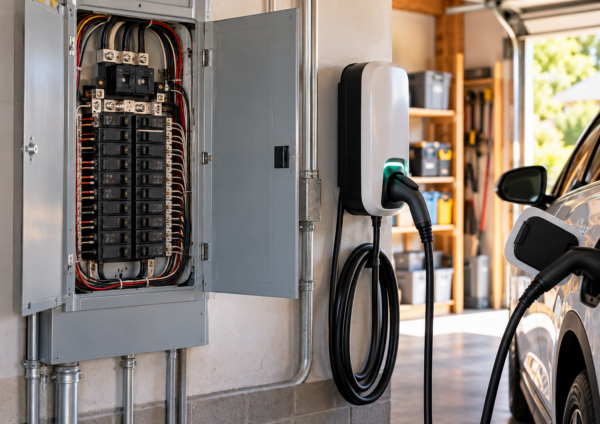 As you transition to an electric vehicle, one of the most critical questions you’ll face is, Can my electrical panel handle an EV charger? This is not just a matter of convenience; it’s a fundamental issue of safety and functionality for your entire home. Consequently, understanding your home’s electrical capacity is the first step toward a seamless and safe home charging experience. This guide will walk you through the essential considerations.
Understanding Your Current Electrical Panel’s Capacity
Your electrical panel, or breaker box, is the heart of your home’s electrical system. It distributes power from the utility line to all the circuits in your house. Therefore, its capacity, measured in amperes (amps), determines how much electricity your home can use simultaneously. Most modern homes have panels rated for 100, 150, or 200 amps. An EV charger is a significant continuous load, similar to an air conditioner or an electric oven.
To begin, you need to determine your panel’s total capacity. This information is usually printed on the main breaker, which is typically the largest switch at the top or bottom of the panel. If your panel is rated below 100A, it is almost certain you will need an upgrade. For a more detailed understanding, it’s helpful to know what size electrical panel your home needs for modern living, even before adding an EV charger.
What is an Electrical Load Calculation?
So, how do you know if there’s enough room for a new, high-demand appliance? The answer lies in a professional electrical load calculation. This detailed analysis, governed by the National Electrical Code (NEC), inventories your home’s electrical demands. Specifically, an electrician calculates the total load from your lighting, appliances, and other systems to see how much capacity remains.
A Level 2 EV charger, the most common type for home installation, typically requires a dedicated 240-volt circuit with a breaker rated between 30 and 60 amps. As a result, this new load must fit comfortably within your panel’s total capacity without exceeding safe limits. Attempting to add a charger without this calculation can lead to overloaded circuits and frequent tripping. For more information on these standards, you can review guidelines from authoritative sources like the U.S. Department of Energy on home EV charging.
Key Factors When Asking, “Can My Electrical Panel Handle An EV Charger?”
When a professional assesses your system, they look for several key indicators. Importantly, these factors provide a clear picture of your home’s readiness for an EV charger and highlight potential issues that need addressing before installation can proceed safely.
Signs Your Panel May Need an Upgrade
Even without a full load calculation, certain red flags suggest your panel might not be ready. If you notice any of the following, you should consult a professional electrician immediately, as these could be signs your electrical panel is unsafe.
- No Physical Space: The panel has no open slots to add a new double-pole breaker for the 240V charger.
- Older Panel Brand: Your panel is an outdated or recalled brand like Federal Pacific, Zinsco, or Sylvania, which are known for safety issues.
- Low Amperage Rating: The main breaker is rated for 60A or 100A, which may not be sufficient with other large appliances.
- Existing High-Load Appliances: Your home already runs a hot tub, electric tankless water heater, or central air conditioning, which consume significant power.
- Frequent Breaker Trips: If your breakers already trip often, your system is likely at or near its capacity.
Solutions and Next Steps if Your Panel Isn’t Ready
If you discover your panel isn’t equipped for an EV charger, don’t be discouraged. There are several reliable solutions a qualified electrician can implement. Furthermore, upgrading your system not only enables EV charging but also enhances your home’s overall electrical safety and capacity for future needs.
Panel Upgrade or Heavy-Up
The most common solution is a full panel upgrade, often called a “heavy-up.” This involves replacing your existing breaker box with a new one that has a higher amperage rating, typically 200A. A 200A panel provides ample power for most homes to run all necessary appliances and an EV charger without issue. This is a job for a licensed residential electrician as it’s a complex and regulated process.
Load Management Systems
In some cases, an intelligent load management system can be an alternative. These devices monitor your home’s total power usage in real-time. If the load approaches the panel’s limit, the system can temporarily reduce the power going to the EV charger to prevent an overload. For example, it might pause charging while your electric dryer is running and resume once the dryer’s cycle is complete. This technology is outlined in the latest versions of the NEC (NFPA 70).
Final Thoughts: Get a Professional Assessment
Ultimately, the only way to definitively answer the question, “Can my electrical panel handle an EV charger?” is with a professional inspection and load calculation. A licensed electrician will ensure your installation is safe, compliant with all local codes, and ready for the demands of your new electric vehicle. Moreover, they can perform any necessary upgrades to give you peace of mind.
Investing in a proper assessment today prevents dangerous situations and costly fixes down the road. Ready to take the next step? Ensure your home is prepared for the future of transportation. Contact Voltek Electric for a professional assessment and free estimate on your EV charger installation.
Related Posts


